
SEEK 47 – Being Catholic
Question: Why my family is Catholic, and I am a Christian?
Bible Reading: Hebrews 10:1-18
Text: “For by one sacrifice he has made perfect for ever those who are being made holy” (Hebrews 10:14)
Several young people have asked this question. It is not an easy one to answer without offending or confusing people, because people are approaching it from different perspectives. For example, you seem to be assuming in your question that being Catholic is different from being a Christian. That may be true in your personal circumstances, but it is not a rule you can make for everyone.
I personally know several fine Catholic Christians – for example the author and journalist Greg Sheridan whose book Christians, the Urgent Case for Jesus in our World I would highly recommend. I love reading Catholic writers like GK Chesterton, Pascal, Aquinas and Augustine. One of best modern Christian writers is Peter Kreeft (see question 44 for my recommendation of one of his books). In the last question I cited a prayer I got from a Catholic website. Some of the finest and most devout believers I have known are Catholics. And I confess that I have spoken in Catholic churches (usually on abortion).
On the other hand I have also known plenty people whose family are Protestant, yet they themselves are not Christians. In fact, on both Catholic and Protestant sides there are plenty who are cultural Christians – their Christianity is not tied in with their personal faith in Christ but which cultural religious tribe they belong to. That can be true for those who take the label ‘evangelical’ to describe themselves. For example one survey in the US found that one third of ‘evangelicals’ did not agree with the Trinity, a fundamental doctrine of the Christian faith.
I also know many former Catholics who are now in Protestant churches and who struggle with the idea that someone can be a Catholic and remain in the Roman Catholic Church (some of this is dependent on the culture of the country they come from).
This does not mean that Catholic and Protestant churches are just two sides of the same coin or that the distinctions between us don’t matter. There has been a bit of a trend in recent years to see some evangelical Christians ‘crossing the Tiber’ (another way of saying that they have joined the Roman Catholic Church). Sometimes I am asked, given that I have a lot of time for some Catholic teachings, Catholic philosophers, and especially their social theology (for example unlike some Protestant churches they are strongly opposed to abortion and to same sex marriage, and for justice for the poor) – why I have not done the same?
There are some Catholic doctrines that I just cannot believe. For example, the believe in Purgatory (a place where Christians go after they have died in order to get their sins purged and to be purified – Christ has already done that for me!). Then there is the aspect of praying to Mary or to the Saints – why do that when we can pray directly to Jesus? I also believe that whilst the Church is important, and the confessions and history of the Church, are to be greatly valued, our ultimate authority always has to be the Word of God, the Bible.
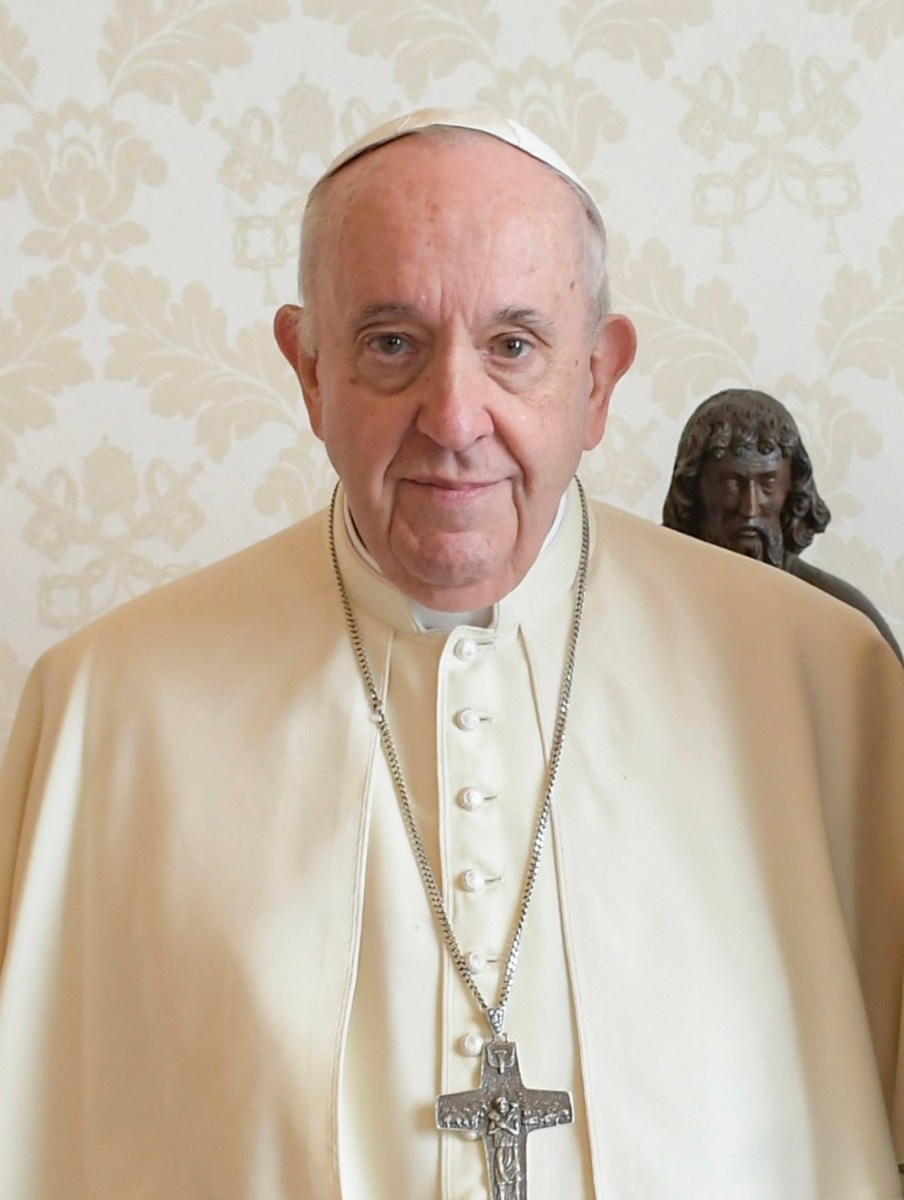
It is impossible for me to believe that the Pope is the head of the Church. I don’t believe, like some Protestants that the Pope is the anti-Christ, and I am greatly appreciative of the writings for example of Pope Benedict, but I do know that the behaviour of some Popes has been atrocious. The infallibility of the Pope is an absurd doctrine – and I suspect many Catholics will come to believe that given the pronouncements of the current Pope Francis!
Another area of great difficulty is that of the Mass. I do not believe in what is called transubstantiation – the belief that the bread and wine are literally turned into the physical body and blood of Jesus. I do not believe that when we take communion, we are offering Christ as a sacrifice again (see the Hebrews text above). A few years ago, I was invited to meet with the new Catholic Archbishop of Edinburgh. I greatly enjoyed meeting with him and discussing in what areas we could co-operate. At one point he asked me – “If I invited you to take Mass with me in my chapel, what would you say?”. I told him that I would politely decline because I did not believe what he believed about the mass, and He said “good! You have no idea how many Protestants pastors have said to me that they would do it. But if they can take mass they should be in the Catholic church. You and I can disagree but respect one another’s position”. My position exactly.
The real problems for me occur not with Catholic doctrine about Christ but rather about what theologians call ‘soteriology’. How we become Christians. Sadly, far too many Catholics believe in baptismal regeneration – that is they think that because they have been baptised they are saved. This leads to complacency and a type of religion which ends up being without Christ. This is not to undermine the importance of baptism but rather to say that baptism without faith in Christ ultimately does not save us.
And neither do good works. To put it simply Protestants, believe that we are saved by faith alone – we call it justification by faith. Catholics believe that it is a combination of faith and works. Although Protestants also believe that saving faith is never alone – and will always be evidenced by works. The distinctions may seem small – but in practice they are really substantial.
My Catholic friends want me to repent and come ‘back’ to what they consider to be ‘Mother’ Church – if not the only Church. I think that the Roman Catholic Church is a Christian Church, but that in some ways it has seriously erred. I suspect that they think the same way about me. I guess in heaven we will find out! But meanwhile I suggest that you ‘search the Scriptures’.
Consider: If you are a Christian in a traditional Catholic home, where you see little evidence of a living faith in Christ, consider how you can be a faithful and effective witness for Christ. Do the same if you are in a traditional Protestant home? Think about some of the differences mentioned above. Which are the most important?
Further Reading:
Nothing in my Hand I Bring – Ray Galea
A Christian’s Pocket Guide to Papacy – Leonardo De Chirico
Jesus of Nazereth – Pope Benedict XVI
Here is a debate I did with Peter Williams on this subject for the Unbelievable programme – https://theweeflea.com/2022/09/11/should-we-all-join-the-roman-catholic-church-debate-with-peter-d-williams/
Prayer: Lord Jesus, we praise your Name that you offered yourself as the one and only, unrepeatable sacrifice for our sins. We thank you that you are our great High Priest, and we don’t need another one. You are the Head of the Church and you have given us your infallible word, not fallible men. We thank you that you save people from every different religious background. May we never rely on our denomination, our church, our works, for salvation, but grant that we would trust solely in you. And grant that we would be united with all who share that same faith, in the name of the Father, the Son and the Holy Spirit. Amen.
In Defence of the Catholic Church
Why Evangelical and Catholic Differences Matter
David, I completely agree with a lot of what you write in this article and also that there are some genuinely saved people who remain within the Roman Catholic Church, though I personally cannot understand why and would seek to encourage them to leave. But that is very different from saying, as you do, that “the Roman Catholic Church is a Christian Church”, for the very reasons which you yourself point out in which RC doctrine deviates from the truth of Scripture. These are not secondary matters on which Christians agree to disagree. These go right to the very heart of the gospel. Like you I do not believe that the Pope is the anti-Christ, but I have no doubt that, based on all the evidence, he is an anti-Christ as, for example defined by John in his first letter, because he believes, practices and teaches what he does. He clearly does not believe that Jesus is the Christ – in the sense of the promised Messiah, come to die a sacrificial substitutionary death sufficient for sinners. If he did, he would not practice the blasphemous act of the Mass. Even the devil believes the fact that Jesus is the Christ, but, of course, that is not what John is saying in his letter. I found it very shocking when the former Moderator of the Church of Scotland, with whom I studied at Bible College, called the Pope his brother in Christ. Ife he does not believe in and teach justification by faith alone he is not my brother in Christ. These increasingly blurred distinctions between the completely false and ungodly system of the RC Church and the faith “once for all delivered to the saints”, do great harm to the pure gospel.
Hi John
I don’t think David is saying ( I could be wrong) that ‘The Roman Catholic Church is a Christian Church’
Many years ago I heard John Stott answer a question on someone being evangelical and Catholic. His answer is that a good Catholic will adhere to the teachings of the Catholic Church, including the Council of Trente, which teaches that evangelicals are damned. A good evangelical will adhere to reformation doctrine which is not compatible with the teaching and practice of the Catholic Church. So although an evangelical can be a member of the Catholic Church he cannot be a good evangelical and a good Catholic.
The problem we have is conflation of what “church” means. It is a nebulous term that refers to an idea of the ecclesiastical hierarchy, or government which contains the things defined, therefore believed and the insituitional gathering therewith.
It didn’t mean any such thing in the 1 st century and certainly the Apostles didn’t teach the stupidity you find in most “churches” which purport to represent them.
Catholics belong to an institution which claims more than a billion people to be “Christians” because they do a whole lot of things that are completely opposed to the Christian message.
So what is Christian about an institution like that? Basically nothing
Roman Catholic Church is a chaos of errors and a masterpiece of Satan. Anyone who is truly saved should come out of her.
I found all the comments very interesting but I do wonder why “ born again Christians “ are so eager to overlook and try and explain the serious errors of doctrine in the Roman Catholic Church which is blasphemous and outside of scripture . It is not just a difference in one opinion like whether we use music in church or have a service with only singing and no music , or whether we practice the gifts of the spirit like speaking in tongues or we don’t believe it is still relevant for today .
The issue with the Roman Catholic Church is that there are so many major doctrines taught that can’t be backed up by scripture , somewhere along the line it was added by man and made believable by superstition and power driven and corrupt leaders .
Now these teachings that were planted by the Roman Catholic Church centuries ago and were not backed by scripture , are accepted and practised worldwide , and no matter how ridiculous some of them are and completely outside of the written Word , the people accepted them and they didn’t question the serious consequences and were not encouraged to check what the scripture said about it .
Jesus is the head of His church not the Pope , Only Christ can forgive our sins , not the Pope , the whole doctrine on Mary is complete lies , and there is not a place mentioned in Scripture called purgatory ! I could go on and on mentioning all the serious claims that the Roman Catholic Church made and all the terrible misleading teachings that have spread throughout the globe , allowing it to become a powerful institution which is filled with corruption and terrible acts of crime which has until recently been covered up . And lastly why were so many godly believers burnt , tortured and dispensed of when they spoke up for the truth of God’s Word ? Are these sacrifices to keep God’s Word pure to be forgotten so easily ?
I work in a Catholic country with the desire to share the real doctrine of Scripture which is free to all who seek and believe it, they won’t have to make confessions or say a Hail Mary , or use their Rosary or any other act to gain forgiveness of sin to escape purgatory !
I love the Catholic people , I love their reverence and dedication and their humility to seek forgiveness for their sins and to go to heaven . But I have no love or respect for those who add or take away anything from God’s Word in order to become powerful and rich and deceitful with the misuse of scripture .
And I question those who take on the name of Christ , and are respected by many , to say that the Roman Catholic Church is a Christian Denomination and it has just erred in its way , it has not erred , it is corrupt , devious and a powerful , wealthy institution preaching a false gospel ! And there won’t be a time when everyone gets to heaven to have a good discussion about it , that in itself removes the whole reason Christ came to earth , and preached the gospel to all mankind on Sin , Hell and Heaven. Now is the time for discussions where we stand , it will be too late when we die and no one will enter into heaven whose name is not written in the Lamb’s Book of Life . ( Revelation 13:8) .
Regarding your reply John, I don’t think David is saying ( but I could be wrong) that The Roman Catholic Church is a Christian Church??
Duncan, David actually says, and I quote, “I think that the Roman Catholic Church is a Christian Church”. The reality is that the RC Church is one of Hell’s major and most effective exports, blinding many to the truth of the gospel and it is alarming when respected and influential Christian leaders portray it in any other way.
Something to ponder. I suppose non-catholics wish to point out the “errors” of the catholic church in order to justify the place where they are at. If their “errors” were false then there would be no justification for being where they are. So in order to to be where they are they need to find criticism with the catholic church. Matthew 7:4
Hi Michael. The errors are so numerous and the system so far away from the early Christian faith that it is hardly necessary to “find” things to criticise. The problem is and always has been that the Catholic institution is unable to listen or hear its errors and EVEN where Catholic “faithful” agree there are errors they “find” ways to compartmentalize rather than face the truth.
The Catholic tradition is so full of nonsense it is difficult to know where to begin, but it is easy to start with the formation of state religion and its imperial ties – to argue those are Christian foundations is an absurdity, yet C and EO both share in this error. Asking if the apostle Paul would have approved the Eastern or Western popes is a bit like asking which gladiator he placed bets on.
Looks like my factual response was censored. How interesting.
There is no censoring how this site….interesting that you think there was!
I apologize to you. I briefly in tiredness misinterpreted the comment disappearing after it was displayed as pending moderation and couldn’t recall this latter comment. My mistake.
I meet with Christians every Sunday. One day a week I meet with Catholics to protest the abortions going on in our city. They pray at the meeting and I do not join them as they say in their prayers mother of God presumably meaning that Jesus is the son of Mary. Nowhere do the SCRIPTURES say to ask Mary, who is dead, to intercede for us now. There is One Mediator between God and man and it is Christ Jesus. We can go directly to Him as he said we should: “Come to to me all who are weak and heavy laden.” I do not see the people I meet with to protest abortion as Christians. That is between them and God.
Duncan, David said, and I quote, “I think that the Roman Catholic Church is a Christian Church”. The reality is that the RC Church is one of Hell’s most effective and iniquitous exports, keeping millions from the light of the gospel and it is tragic and deeply disturbing when respected and influential Christian leaders speak so warmly of this hellish institution.
Just came across this quote from John Bunyan which strongly supports my strong comments about the devilish nature of the RC Church. “Whatever contradicts the Word of God should be instantly resisted as diabolical.”
Interesting read – article and replies.
I come to this as a protestant christian, with a catholic wife (both practising). I struggle with some aspects of catholicism, but I’m attracted to others:
1. Unity of the church. I struggle with the fact that there are 1,000s of protestant denominations all doing things slightly differently. Even with my own denomination there isn’t consistency on teaching / approach to marriage and infant baptism, to give two examples.
2. Authority of scripture. A few replies have made comment to scripture being the ultimate authority and not man. The canon of scripture was given to us by the early church . If relying on scripture alone and not man, why was it ok for Martin Luther to remove 7 books from the Bible? Without a teaching authority we’ve got so many different interpretations of what the Bible says (and I believe this is a large part of what is tearing apart the church here in Scotland – people don’t know what the church stands for anymore). The early church also taught authoritatively – look at Paul teaching that circumcision wasn’t necessary for salvation.
3. John 6 / The Eucharist. We’ve been working through John 6 over the last few weeks and it’s a difficult read. Jesus talks clearly about his flesh being real food, and his blood being real drink. He doesn’t back down on this or water down to explain it as only metaphor. People walk away from him at this point, as it is so difficult to hear.
As mentioned above, I do struggle with aspects of the catholic church’s teaching – assumption of Mary, perpetual virginity of Mary etc. but I do find that now, more than ever, I am drawn to the catholic church as I’ve learned more about it.
Hi David, your attraction to those ideas is understandable, but allow me to underscore that they are ideas and not real within Catholicism.
1) the Unity of Catholicism is centered on outward conformance to its canon law and accepting the RCC hierarchy. However the split in beliefs and practice is not absent, those differences are simply not recognized. It is an illusion. There are Tridentine Catholics (trads), Norvus Ordo Catholics (Vatican 2), Sedevacantist Catholics (Peters throne is vacated) and some others. EO is also a denomination. So there is no security in having an enforced unified law and structure as far as whether it is truthful.
The Protestant divisions – yes some of them are absolutely crazy and it is a confusing world, but at least you know where they stand and can decide. The Catholic church simply tells you what to profess with your mouth and cares very little about anything outside that allegiance.
2) the early church was actually widely read and didn’t have a codification of what was canonical so there is a difference with the later council of the North African church already. Yet Athansasius knew what scripture was and wrote a list out, so did Jerome, so did Cyril and so on. The general Septuagint translations were taken to be authoritative scripture, but individual lists still differed a little and many specified if they viewed different books in different classes of either authoritative, or “edifying”. Some of the Epistles were questioned. And we can question books today. However, the protestant canon does not deviate from the core of accepted works. Many in the early church questioned the Apocalypse of John, but Protestants accepted it and frankly most of us would consider it one of THE most important books. Maccabees isn’t even instructive in that way and the parts used by Catholic apologists to defend doctrine and weakly misapplied. Judith I don’t even see HOW anyone could believe it’s scripture personally.
3) On the Eucharist, I would submit to you that while the sacrament should be treated as Holy, this does not equate to the madness that has developed within Catholicism. The majority don’t even administer the cup to the congregants as a result, so in what way do they actually even remotely obey John 6? They even discuss rules against chewing the bread, when Jesus clearly used the word chew. Do you really think Jesus used catching trays at the last supper? Again, claiming something by wrapping it in illusion is what Catholicism does best. But frankly, claiming the Eucharist “host” is literally God and worshipping bread presented in a sun disc is literal insanity and not Christian. Think about it – why do they use the term “host”? Obviously because they regard the bread as a container and not the real thing. Irrefutable.
The reason many Protestant churches are frustrating and feel weak next to this area of Catholicism is the stupidity of the temperance movement affecting the wine of Eucharist and the insistence on Catholic distancing utterances such as “just symbols” and so on.
The true doctrine is that by faith you regard those signs as Jesus body and blood. A simple truth, End of.
So before you allow yourself to be drawn, make sure you know who is pulling!
David , I read your letter and took note of your concerns , but I will just take up one point Matthew Ch26 v26 tells us that Jesus TOOK BREAD , and blessed it , and brake it , and gave it to the disciples ,and said , “Take eat, this is my body.” (27) and he took the cup ,( WINE ) and gave thanks , and gave it to them, saying “Drink ye all of it; (28) For this is my blood of the new testament, which is shed for many for the remission of sins.”
This act not only reminded and celebrated the deliverance of Israel , but was to remind brothers and sisters in Christ in the future of what he was about to do. His body was shredded ( whipped and lacerated) broken , and his blood was shed for all who believe , ( not at the meal table) but some hours or so later , so that your sin and my sin would be taken away FOREVER .
The bread and the wine are symbolic , which is a far greater mystery and blessing to us. The Lord bless you !
Gylen, I’m genuinely not trying to be pedantic but it’s an important theological point to stress that Christ was indeed whipped and lacerated but not one bone of his body was broken in fulfilment of prophecy – cp John 19:36. I always get frustrated when church leaders misquote Christ at the Lord’s Supper, saying ‘this is my body which is broken for you’. Jesus used the word given not broken.
A young Priest came in to our area in the eighties whom I befriended. As the leader of an independent evangelical group I watched how he worked . One of his group asked me about scripture and I took them through the book of Romans , where the eyes of that person was opened to the truth of God’s word. Calling on the person to again break the Bread of Life , and on entering the home ,I was verbally accosted by another screaming blasphemies and swearing that I was taking someone away from the “true faith”. I left !
I since discovered that within Protestant circles that there is an equally spirit destroying “fellowship” that would also seek to negate the Christian faith , with its rituals , scriptural interpretations pertaining to “brotherhood”. They too justify themselves in society , but they undermine the beauty and truth of God’s word . Speak out against either of those organisation’s and you will find hell rising against you . Thankfully God’s word supplies ample protection and comfort from such ! Time this morning does not allow me to write further.
Thank you , John, For your correction on my use of the word “broken”. I do appreciate it , and accept the reference to John 19 v 36.
Much has been commented on the Eucharist and catholic belief in transubstantion, the miraculous change by which according to Roman Catholic and Eastern Orthodox dogma the eucharistic elements at their consecration become the body and blood of Christ while keeping only the appearances of bread and wine..
Not anything new for the Catholic Church. Even the Church Fathers had much to say about this well before any so called “Reformation”.
Readers may care to have a read of the following:
https://www.catholic.com/magazine/online-edition/the-early-church-believed-in-the-eucharist
I don’t know if the Catholic apologist used Protestant apologist Brian Culliton because he is a less able apologist or not. I have never heard of Culliton. What I can say in reading the early church fathers is that none of the quoted proves real as in physical presence of blood and body flesh and liquid blood was the understanding presented. I do not see that in the language. What is being said it that the use of wine and bread is to represent the body and blood or it would miss Jesus meaning.
To lessen the force of Jesus’ words would not please the early church father’s interpretation. They speak in language that is very close to real body and real blood terminology, but never cross the line into anything which expresses real physical human blood and flesh in the sacrament. It is a very delicate area of theology and practise in the churches but we see it has interpreters arguing over it. If it is to be interpreted correctly let us hold to Holy Scripture rather than any tradition as the final arbiter. The Holy Spirit speaks most clearly, powerfully and indeed infallibly through Scripture and no man has the power to choose any way to interpret other than what Scripture has already set down. This is the tradition of Scripture.