
This article was first published on Christian Today here
Seismic elections in the UK – the good, the bad and the ugly
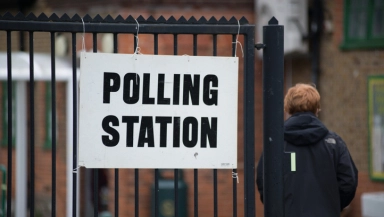 The times they are a changing – or at least it appears that way in the UK. Most commentators agree that something seismic has shifted in UK politics. For some it is like the beginning of a new Nirvana – we now have ‘hope not hate’; our country is on its way back; independence is coming.
Others think that these elections do not bode well for Britain and that we are sliding into some kind of dystopian apocalyptic future. Many just can’t be bothered. They don’t even care about being apathetic. The more things change, the more they stay the same.
I would suggest that, leaving out the hyperbole, these are the most significant elections since Maggie Thatcher was elected – or perhaps the Brexit referendum. Reform were the big winners, followed by the Greens, Plaid Cymru and then the Scottish Nationalists and the Lib Dems. What can Christians make of it all?
There is much that could be said but let me make just a few observations that I hope will help – or perhaps just annoy you.
The Good
There were good things in this election.
1. The fact that we had one at all
There is increasing concern that as we move away from Christian values, we will become less democratic. We should use the vote while we have it.
2. Several myths were put to bed
The myth that an incumbent party cannot win. The myth of Scouse and Scottish exceptionalism – the notion that somehow these areas of the UK are different. Reform did well in both of them. The same problems that apply in England apply across the rest of the UK.
3. The two-party system is over
England now has a five-party system (Tories, Labour, Liberal Democrats, Reform and the Greens). Scotland and Wales now have a 6-party system – just add the Nationalists to that list. Whether the current electoral systems can survive this is questionable. Maybe we might end up with a better one?
4. Britain will not be broken up
This may seem counter intuitive. After all, there will now be nationalist leaders of Northern Ireland, Wales and Scotland. Is this not part of the ‘inevitable march to independence’? X tells us this is inevitable … And yet these elections saw the end of any possibility of the UK breaking up in the next five years. Why? The fact is that 60% of Scottish voters voted for Unionist parties. John Swinney had claimed that if the SNP got a majority, they would have a mandate for Indy Ref 2. They didn’t.
Likewise in Wales there was no majority for independence. Plaid Cymru did so well because they are not Labour and they are not Reform. What all of this means is that there will be lots of noise from the Nationalists, no action, and no change. The UK government will never agree on these figures – and referendums cannot legally be held without the agreement of the UK government.
The Bad
1. The Balkanisation of Britain and the Rise of Sectarian politics
The Labour minister, Chris Byrant, speaking on the BBC, warned that there was a dangerous rise of sectarianism in UK politics. Of course, one of the reasons for this is the inability of government ministers like Chris to name the elephant in the room. He spoke about sectarian politics between Catholics and Protestants in the past in Glasgow and Northern Ireland, but he couldn’t just mention the unspeakable word – Islam.
When the Green leader in Bristol was asked about why Gaza was an issue in Bristol local council elections, he stated that Bristol ‘is an international city’. Yet you will struggle to find people voting in Bristol on Sudan, Nigerian or Uyghur issues. No candidates will drape themselves in the Ukrainian flag in the same way that many wore the Palestinian.
The issue here is the sectarian one of Islam and Israel – the Jews. It was notable that the Muslim Labour vote in some areas fell by 30%. The rebranding of the Greens as the Islamic party – plus the number of ‘independent’ candidates standing as Muslim activists in Muslim areas – goes some way to explaining this.
2. The rebranding of political and religious extremism as hope
It is ironic that the party with the most extreme and hateful politics is the one that most uses the slogan ‘hope not hate’. In Wales, Plaid Cymru successfully argued that people should vote for them to stop the ‘extremist’ Reform. They did not argue about stopping the far more extremist Greens. Largely because in Wales, as in Scotland, the Nationalists have been taken over by the same ‘progressive’ ideology championed by the Greens.
3. Labour is no longer the party of the working class
Former Welsh Labour leader, Lord Carwin Jones, admitted as much in a revealing interview. Labour has largely ceased to be the party of the working class, since it was taken over by Tony Blair’s Islington set. I find this particularly depressing. The party of the workers has become the party of the establishment.
4. The apathy
In Scotland they spoke of people being ‘scunnered’. So many people are just fed up of the politicians and their empty promises that they just did not bother to vote.
The Ugly
1.The demonisation of Keir Starmer and Nigel Farage
Whilst I do not agree with the Prime Minister on many issues and struggle to see him as anything other than a weak leader, I really do not like the personal animus against him. It reminds me of the days of Thatcher. Disagree with her policies but don’t portray her as the devil. Likewise with Nigel Farage.
2. The replacement of good, capable and experienced politicians
With those who, shall we say are less talented or experienced! In Scotland MSPs like Kate Forbes, Fergus Ewing, Monica Lennon, Jackson Carlaw, Jeremy Balfour have been replaced with people who have little experience, less knowledge and no ability to govern. Think for example of the Green MSP in Glasgow, a biological male who identifies as a woman and who has in the past celebrated the Queen’s death in the most disgusting terms. Or another Green trans MSP in Edinburgh who is not even a Scottish citizen – he is here on a student visa which does not let him work, but still he has been elected to govern Scotland! There are many other instances throughout the UK of the collective insanity which has gripped some quarters of our nation.
Christian Responses
What are the Christian responses? Let me summarise them here.
1. Nothing to see here
Things are as they always have been. It’s always the same after every election and yet we muddle through. This is a level of complacency and blindness that I find hard to comprehend.
2. Revival is coming – Christian nationalism or some form thereof is on the rise
But is it? And do we want the Gospel to be turned into a nationalism? Real Christianity is not politically aligned and calls both Left and Right (and everything in between) to repentance.
3. The End is nigh – or at least I wish it was
I find so many Christians are now praying more fervently – Come Lord Jesus. End it all. We have had enough. I understand this – and I pray it. But until He does come, we have work to do. And we must not despair.
4. Man the Lifeboats
This is my own personal position. I doubt that the UK can be saved. It is too broken. Too confused. The demons are in too deep. But that does not mean that the Church should give up. We have been here before. The Roman Empire was a horrendous, cruel, pagan society and we flourished within it – before eventually taking it over!
Right now what the UK needs is not more politicians or more political parties, but more Christians and more faithful churches, who are prepared to be counter cultural and prophetic. Britain’s hope is not in politics, but in Christ.
Am I concerned? Absolutely. There is much to be concerned about. Am I in despair? Absolutely not. Because the gates of Hell will not prevail against Christ and His church. May the Lord renew, revitalise and return the UK to its Christian roots.
David Robertson,
A Scot in Exile.
David Robertson writes on https://substack.com/@theweeflea
Reform exchanging notes with One Nation I expect.. the establishment taking the people for granted.. and yet they still scratch their heads?!.. Or appear to anyway.
Thank you. Just what we all think.
Excellent article, David! Succinct and timely.
Thank you, a helpful analysis and as always God is Sovereign (Isaiah 46:10 ).
Thank you for this David. Your final paragraph was particularly encouraging for me. (The Green party situation above all else blows my mind) However, so does the bitterness often expressed on social media, between Christians with differing political views. Surely the common ground of Christ and those facing a lost eternity is worth sharing a common grace with each other. I always use my vote…Rarely these days do I know truly who to vote for. Thankfully God is sovereign…and there will be no politics in heaven!
Oh dear. As you know I’m a struggling sinner trying to find my way. I see nothing Christian nor religious in this message. It is disappointing that you cite the people of Bristol not protesting about anything other than Gaza – when in fact protests in Bristol are mounted against the treatment of the populations of the other countries you highlight. You are entitled to your views on Islam, but you seem blind to the fact that Capitalism and the West are the root causes of much of the influx of migrants to these shores.
As a struggling sinner, I would suggest that this is probably not the best site to try and find your way. What I mean is that this is a site that looks at Christian views of politics and culture. If you’re really trying to find your way, I suggest that you listen to some of my sermons on YouTube.
As a struggling sinner, I would suggest that you refrain from making judgments about whether something is Christian or religious in an article.
I’m interested in your saying that there are protests in Bristol about the treatment of Christians in Nigeria, or protests about the treatment of people in Sudan, or protests about the Uyghur people in China. Please could you provide some evidence for this?
It doesn’t matter what my views on Islam are, it matters what God’s views are. And I’m not sure why capitalism and the West are the causes of the influx of migrants wanting to come to these shores, other than the fact that capitalism has made the West very prosperous, and they want to share in it.