
This is my latest article on Christian Today – you can read the original here
The problem with the King’s Gospel
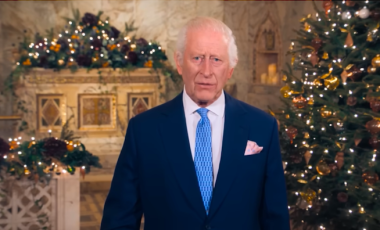
In a year when the Archbishop of Canterbury was forced to resign, and with continued decline in attendances in the Church of England and yet more scandals, I listened with interest to the titular head of that Church, King Charles, giving his Christmas message. Would he speak of the real challenges the Church and society are facing? Would he offer some kind of meaty message, rather than the saccharine sap we are so used to hearing? Would his message stimulate thought or provide hope to those who are in great need of it?
Sadly the message was largely the same moralistic, do it yourself, multifaith religion – with rightful tributes being paid to servicemen and women, volunteers and doctors and nurses. As the head of the Church of England you might have expected the King to offer a little bit more specifically Christian comment, but this was basic humanist doctrine, tinged with a splash of religiosity which I suspect would satisfy no one who actually listened to what was being said.
To be fair, King Charles is nothing if not consistent. His Christmas message this year was similar to the one I commented on two years ago and his Thought for the Day delivered at Christmas 2016.
However there were some differences. This was only the third time in 100 years that the talk was not recorded in a royal residence. The fact that it took place in a former hospital chapel was particularly poignant given the King’s own cancer issues, and that of his daughter-in-law, the Princess of Wales.
War as Sacrifice
He was surely right to reflect on the 80th anniversary of D-Day – but I am always a little uneasy at the simplistic view of war which is so often espoused on these occasions. I’m sure there were many soldiers, sailors and airmen who did ‘give of themselves so courageously’ and who do serve as ‘an example of service and selflessness’. But not all. Servicemen and women did not have a choice. They were conscripted. Implying that these men and women were volunteers who sacrificed themselves for our greater good is not quite the whole truth. Many would have felt as though they were the sacrifice.
Another difficulty within the speech was how out of touch it was in some areas. Not least when he stated that “During previous commemorations we were able to console ourselves with the thought that these tragic events seldom happen in the modern era.
“But, on this Christmas Day, we cannot help but think of those for whom the devastating effects of conflict – in the Middle East, in Central Europe, in Africa and elsewhere – pose a daily threat to so many people’s lives and livelihoods.”
The problem with this is that during previous commemorations there were wars and violence in many parts of the world. It is true that there was no World War 3, nor a major war in Europe involving the great powers until the Russia/Ukraine war – but conflict has been, and continues to be, part of human existence.
The Gospel according to the King
But how are we to overcome that conflict? The King suddenly brought in the Gospel – but it was a very different Gospel to the one Jesus taught. Take for example this statement: “We also think of the humanitarian organisations working tirelessly to bring vital relief. After all, the Gospels speak so vividly of conflict and teach the values with which we can overcome it.”
But that is not what the Gospels do – although it may be part of their fruit. They do not provide us with a moralistic tale telling us that we can defeat violence by being nice to each other and giving ‘peace a chance’. The Good News is about how Jesus came to earth to save his people from their sins. He was born to die – not born to set us an example for 21st century ‘values’.
The King’s misunderstanding of the Gospel continued: “The example that Jesus gave us is timeless and universal. It is to enter the world of those who suffer, to make a difference to their lives and so bring hope where there is despair.”
There is of course an element of truth in that – as there is in most errors. Of course, we should want to help the suffering and bring hope where there is despair. But what hope can we offer? It must be the hope of the Gospel. The hope of Christ himself. Christ came to give us eternal life, to deal with our sins, not just to be a kind of divine Hallmark card for humanity.
The ‘inclusivist King’ v. the exclusivist Jesus
The Jesus that the King was speaking about is also the one who said that he is ” the way, the truth and the life” (John 14:6). King Charles thinks that he got that wrong – and would much prefer it if he had said ‘I am a way, a truth and a life’ amongst many others.
“That is the heart of the Nativity Story, and we can hear its beat in the belief of all the great faiths in the love and mercy of God in times of joy and of suffering, calling us to bring light where there is darkness,” he said.
But again, Jesus said that he is the light. The reality is that the ‘religions of mankind’ are part of the great darkness engulfing the world – and bringing so much conflict into it. Christians are to flee from idolatry and false religion, not embrace it – and not demean Christ by putting him up on the mantelpiece with our many other gods. “Salvation is found in no one else, for there is no other name under heaven given to mankind by which we must be saved” (Acts 4:12).
The King’s Political Gospel
Instead of the Gospel of Christ the King offered the truisms of those whose faith is that all faiths are fundamentally the same. But he also added a political edge: “Diversity of culture, ethnicity and faith provides strength not weakness.” That is not self-evidently true. There is in fact considerable evidence that while diversity is a good thing, too much of a good thing can be harmful. The recent problems in Europe and the UK are not caused by a lack of diversity, but by a lack of a cohesive culture throughout society. Having given up the roots of Christianity, our cultural elites want to keep its fruits – and that is proving as fanciful and unlikely as their theology.
The political commentary continued when the King gave a rather political statement with a somewhat simplistic analysis of the problems that arose in the UK after the murder of the Southport girls.
“I felt a deep sense of pride here in the United Kingdom when, in response to anger and lawlessness in several towns this summer, communities came together, not to repeat these behaviours, but to repair. To repair not just buildings, but relationships. And, most importantly, to repair trust; by listening and, through understanding, deciding how to act for the good of all.”
Again, it’s a neat soundbite but like most soundbites, it is superficial, lacks understanding and offers simplistic solutions which demonise some and sanctify others.
Before the King finished, he offered again his rather naïve view of all the faiths and philosophies in the world: “Again, listening is a recurrent theme of the Nativity story. Mary, the Mother of Jesus, listened to the Angel who revealed to her a different future full of hope for all people. The message of the Angels to the shepherds – that there should be peace on Earth – in fact echoes through all faiths and philosophies.”
If only the King would listen to what Jesus teaches, he would find that peace on earth comes only through Christ, not through the many contrary faiths and philosophies.
I was particularly disappointed at this speech because it came only a few weeks after the King attended a church I used to belong to – St Thomas’s Anglican in Sydney – and heard a sermon from the excellent evangelical Archbishop of Sydney, Kanishka Raffel.
I had hoped he would listen to and be challenged by what he heard. But to be honest I can hardly blame him for hearing what he wanted to hear. Far too often we preach in code and memes, apologising for the church and using generalisms and buzz words familiar in the culture, straining not to cause offence (especially to the rich, powerful and influential) – but which ultimately leave out any bite. And therein lies the main problem with the King’s Gospel. It is a gospel for our age – which is no gospel at all. Ultimately it leaves out the real Christ, and leaves us with a collection of wishes and cliches – which saves no one.
We continue to pray that King Charles would come to know and love the King that his mother so clearly loved and served. We need the Good News, not the wishful thinking of a fanciful ideology which ultimately helps no one.
David Robertson is the minister of Scots Kirk Presbyterian Church in Newcastle, New South Wales. He blogs at The Wee Flea.
Well said, David. Nothing to add.
I was hoping you would write a commentary. I listen to the king’s speech every year. And this year it did the same again – left me empty and sad. I am what one would call a ‘royalist’ , but I am so glad my citizenship is ultimately in another Kingdom. The King is I believe a good and sincere man, but a very misguided one when it comes to understanding the gospel. But then look at the state of Anglicanism in the UK. As with the priests, so with the King – fills me with a sense of foreboding for King and country. Lord have mercy. Come Lord Jesus.
OSL I53 [One Solitary Life Isaiah 53] was entirely missing!
Better if Anglican Bishops were removed from the House of Lords, and if the nominal Head of the Anglican Church in England was not a King or Queen. ‘Power to demolish strongholds’ could come to mean fewer Bishops and Diocese, less interference in party politics, and a Church leader (not monarch) as C of E leader.
frankly, I reckon the King has no business being the head of the church of England. It would be a positive improvement for him to renounce that role for himself and all future monarchs. They should confine themselves to affairs of state rather than presuming to have any legitimate authority in the church.
If there is a compelling case for an independent Scottish republic, Charles embodies it. All of Scotland’s problems- immorality, poverty, decay- have come from, and because of, England and the wretched, tyrannical Treaty of Union. Paul’s command to come out and be separate is a highly appropriate one in this light.
Please do not misuse Scripture in that way. Pauls command to the Corinthians was to come apart from idolatrous worship and has nothing to do with a country becoming independent. Given that the current Scottish government is so pagan and anti-Christian your misuse works even less! And it is far too simplistic to suggest that ALL of Scotland’s problems have come from England….I’m afraid your comments represent the worst kind of nationalism….and I say this as someone who wants Scotland to be independent!
As godless as England has become, it’s still got a way to go before it can catch up with Scotland.
I haven’t watched the entirety of this year’s King’s speech, but have read numerous articles on it, so have an idea of what he said.
Not meaning to sound controversial, but I don’t see much different in what Charles said compared to what his mother said every year – Jesus is ‘an example’, follow His example to do good/love/serve, etc etc. It follows the same sort of thing, in my view.
I suggest you look again….the Queens speeches were significantly different…for example this from 2011
“Although we are capable of great acts of kindness, history teaches us that we sometimes need saving from ourselves – from our recklessness or our greed. God sent into the world a unique person – neither a philosopher nor a general (important though they are) – but a Saviour, with the power to forgive.”
His Majesty said that Christ met with ordinary people and showed them the transforming power of God’s redeeming love. That’s a decent statement, which you pass over, for some reason.
Thanks P……Thats not quite what he said….he cited in quotation marks a couple of carols which spoke of Christ coming amongst the poor and meek and lowly….and transforming them through God’s ‘redeeming love’. It’s only a decent statement if you provide it in the context – and in this context he demonstrates that he does not know what God’s redeeming love is – because he suggests Christ only as an example and not a Saviour. Only as one religion amongst many – and not the only name by which men can be saved’. I only ‘passed over’ this statement because I had a word limit and all I would be saying is what had already been said. This is meaningless religious waffle….
Besides which I have an aversion to one of the richest men in the world, who lives in several palaces, talking about the ‘poor and meek and lowly’!
Well, as king of the whole of the UK, surely he needs to speak to everyone and not just Christians (and particular flavour of Christian at that!) Whether he does it well of not varies by the listener. Of course disestablishing the Church of England would save all this!
The bottom line is KC3 could not be more out of touch with the reality of his kingdom for he clearly believes diversity is a good thing where as it is now and will increasingly become a very serious problem in the UK and indeed the whole of the Western world.
He is I’m afraid a spoilt brat pushing the madness of Net Zero unlike his sister and father who have and had far more common sense in their little fingers than he has in his whole body.
I should add to my comment above that it is a fact KC3 cannot take any criticism of his stance and belief on issues which is why his views are very unbalanced.
king charles shows more christian values then you will ever do you woke bigot
If the ‘woke bigot’ was addressed to me then you are way off beam and not to realise and understand that KC3 is the one who is seriously woke and spoilt makes you delusional IMO.