
This weeks article on Christian Today – you can read the original here
Lessons from the EU Elections
This is a big year for elections. Already the biggest electorate in the world, that of India, has chosen to stay with its current leader. The election in the UK appears to be stumbling towards a foregone conclusion. And the unbelievable choice the American electorate have to make will come to a head in November. But last week it was the turn of the 400 million voters in the European Union and the results were revealing.
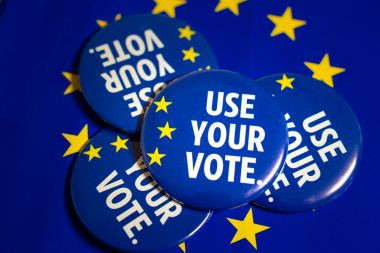 There was a general move towards the right, with the exception of the Scandinavian countries. While the centre right held on – and even gained a few seats – the centre left and the Greens took a battering. The Greens lost 20 seats, the ‘Renew’ centre left grouping lost 23. Meanwhile Meloni in Italy cemented her power and demonstrated her increasing leadership in Europe by an astonishing result.
In Germany the AFD, despite a disastrous campaign in which they were disowned by Marie Le Pens’ National Rally as being too extreme, came second. The governing party, Olaf Scholt’s SPD, only got 13.9% of the vote – their worst result since 1949. In Austria, the right-wing Freedom Party won, despite only being formed during Covid as a reaction to lockdown measures.
But it was the result in France which had the most impact. Le Pen’s RN got 31.47% of the vote, more than double the result of Macron’s party coming in second with a mere 14.56%. As a result, Macron pushed the ‘nuclear’ button and dissolved parliament, setting new elections for the beginning of July. His job as president is not up for grabs but he seems to be gambling that when faced with a choice of the right-wing FN or his centrist party – in a parliament where the results matter because, unlike the EU, the French parliament has real power – the French electorate will come to heel.
There are four major lessons to be learned:
1. Immigration, Net Zero and progressive ‘woke’ policies are a real vote loser for many people. The lack of genuine debate and the marginalisation of anyone who questions the self-evidently ‘correct’ views, has pushed many to the margins.
2. Religion – and particularly Islam – has become a major issue. The question of whether Islamic political theology is compatible with Western liberal democracies based on Christianity is one that has yet to be answered.
3. Young people are in general moving more towards the right. In one sense this was really surprising. The general assumption has been that the younger you are the more likely you are to vote for Green/Left/Progressive parties. It was on that basis that the SPD and Greens in Germany lowered the voting age to 16. The youth rewarded them with 17% of under 24 year olds, and a majority of 24 to 30 year olds voting for the AFD. In France 32% of 18 to 34-year-olds voted for the RN – more than double that of 2019. But when you think about it, a youth rebellion against the progressive establishment is not that surprising. Around 50% of young people do not go to university and are not subject to the indoctrination that has now become mainstream. Plus, young people rebel. To be Green and Progressive is the Establishment position. To be right wing is to be a rebel now.
4. Democracy is under threat. Those on the progressive left would entirely agree with this statement, but they do not realise that they are as much a major threat to democracy as the far right. Why? Firstly, because they make the dangerous assumption that democracy is under threat because people voted for parties the left do not like. That is democracy. When you threaten to ban groups or limit free speech (for example banning Tik Tok or ‘misinformation’), in order to get the result you want, that is the real threat to democracy. It is interesting that the BBC for example regularly refers to Le Pen’s RN as far right, or extreme right, but never refers to the radical left-wing La France Insoumise (LFI), who gained almost 10% as far left. They can’t even bring themselves to say that about the Communists! When you have such bias in the media, academic and political classes, it is the far right who benefit – because people think that if wanting less immigration, less woke policies, and supporting traditional marriage makes them far right, then they might as well support parties which take advantage of that.
Democracy is also under threat in another way. The EU elections are very unusual. They are for a parliament which has very limited power. It is the only democratic parliament in the world which does not have the power to initiate its own legislation. That is why many regard the EU elections as the biggest opinion poll in the world. The EU Commissioners are the people who have the real power. Given that they are appointed by national governments it is assumed that the democratic control comes through them. But the trouble is that no EU government would dare go against the Commission – they could not survive.
The European Union is a supranational body, not a collection of independent nation states. In effect when a nation state joins the EU it gives up some of its national sovereignty to what is essentially a bureaucratic technocracy. The EU faces economic stagnation, a growing militarisation in the light of the Russia/Ukraine war, a disenfranchisement and disillusion among many people (only 50% of people bother to vote); the increasing costs of Net Zero; the growing immigrant crisis and the question of how Islam fits into a post-Christian Europe.
These last elections show us that the people of Europe are unhappy with the current situation. They will not change anything. The basic structure of the EU was designed to prevent such ‘populist’ movements (what some might call democracy). From a Christian perspective the greatest change that Europe needs is a revival of vital Christianity. The ultimate choice is not between right and left, democracy or technocracy, progressivism or conservatism, free markets or big government. The real choice is whether Europe is going to regress to paganism, become an Islamic theocracy, or return to its Christian roots. May the Lord show mercy and shine his light in the darkness.
David Robertson is the minister of Scots Kirk Presbyterian Church in Newcastle, New South Wales. He blogs at The Wee Flea.
Should I vote for a Christian Candidate? – CT
The options you give are wrong.
Europe could easily become predominantly Christian again by bringing in hundreds of millions of black African Christians.
Is that really what you want?
The real choice is whether Europe remains the land of the Europeans or we are replaced by people from other continents.
Great idea!
Looking after the environment and moving away from fossil fuels should not be a left vs right issue. Surely looking after the one place in the known universe we know we can live is just common sense? Ultimately, investing in renewable energy and energy efficiency will help all people. I do not see it as being an issue from a Christian perspective. How is a net zero policy a problem?
Is immigration a problem from a Christian perspective too? I always got a ‘love thy neighbour’ vibe from the New Testament.
Is right wing politics more compatible with Christianity in general or is it just the left wing’s current focus on the inclusion of people (woke?) that is incompatible?
Thanks Daryl – if it were as simple as that I would agree. But the question is whether renewable energy is common sense. What if it causes more damage, or harms human beings? The situation is a bit more complex than fossil fuels bad – renewable good. Net Zero is a problem because it won’t work, it is expensive and it will harm the poor.
Likewise the situation on immigration is much more complex than just the ‘love your neighbour’ vibe means that you must accept every immigrant who wants to come to your country. That would be impractical and foolish. The question is how much immigration and what kind of immigration?
I find it difficult to comment on the right wing/left wing thing because it all depends what you mean….I think the terms are largely meaningless…
Just wondering how you arrived at your conclusion that net zero will not work? My impression is that it will be difficult but not impossible. Climate change is predicted to cause considerable suffering, and the poor are bound to suffer the worst of it. I think net zero is an admirable goal. It would be interesting to find out why you think renewables could harm us? Particularly how they may be more of a threat than the effects of greenhouse gases.
If the poor are a concern, how about pushing for the redistribution of wealth? There is enough money in the system but it is ever increasingly being funnelled to a select few. In what world is Elon Musk worth a pay package worth $56 billion? Think of the good that could be done if the wealthy were pressured to help the needy. It would be nice to hear some push back against the greedy rather than net zero policies.
For clarity, I am not the same Daryl as the other poster.
It won’t work because it will make little difference….listen to this weeks podcast and click the link on why – even if net zero was achieved – it would make little or no difference to climate change. Renewables harm us in many ways – first they are not net zero – 2nd how they are produced – 3rd the harm to wild life and the environment – 4th – it is the rich who benefit and the poor who will suffer. 5th – net zero does not work when we do it and China, India, Brazil etc don’t. All we are doing is farming out our carbon.
No Elon Musk is not worth a pay package of £56 billion…..but it is the greedy who will benefit from net zero policies…..the climate change scam is the greatest transfer of wealth from the poor to the rich that has yet been divised…
Thank you for the reply. I listened to the podcast.
I am not sure how harmful many renewables are. I believe some of the chemicals involved in solar panels can be unpleasant and old solar panels can be an issue to dispose of, but that is it. Not sure how other renewables are harmful to produce.
There is harm to the environment, mainly through the destruction of habitat. I doubt that the damage is on the same scale as the effects of significant changes to local climates and rising sea levels though.
As for the rich benefiting; when do they not? That is why I think just as much time should be spent on the baked in inequalities of our financial system as net zero. Have you made a podcast raising the issue? Happy to listen to it if you have. It is hard to think that investment and adoption of renewables can be worse for funnelling wealth to the richest compared to the fossil fuel industry. At worst it is more of the same.
I think you were far to dismissive of the change in global temperature of 0.28 degrees. It is small, but when you are talking about a global increase the local effects of that change need to be considered. A change of 5 degrees sounds small too, but you do not want your body temperature to change by that much.
If you want to see change in China et al then we need to lead the way. Be the change you want to see. If part of the problem is that we are farming out our carbon emissions then start solving that problem too.
On a connected issue, I would be interested in your view of the use of nuclear fission. I would like to see the use of nuclear power as part of the transition to net zero. It is far too demonised and misunderstood in my opinion.
They are ‘harmful to produce because you need to mine for the metals…..you need to use carbon to make them (ie. they are not carbon free)….and they destroy the environment. For what reason?
A change of 5 degrees in your body temperature is massive. A change on 0.28 degrees in the the whole climate is minimal. It is also something that could have numerous causes – sun spots – one massive volcanic eruption….
Yes – I have made frequent mention of the economic inequalities and injustices in my podcasts. Unlike most on the Left today I am more concerned with economic inequality than social progressive doctrines.
It is easy to think how investment and adoption of renewables will increase that gap – because the wealthy will use the government to get subsidies in the name of ‘saving the planet’……let me give you an example….my mother has seen her energy bills go up 400% – including a green levy. A levy which is used to pay the rich landlord who has put up a wind turbine (funded by the government at $20,000 per year).
I used to be totally against nuclear but I have changed my mind….Michael Schellenberger and other Greens having convinced me. Its the best carbon free option….
I appreciate that carbon dioxide is released in the production of renewables but there would be a net benefit to emissions overall.
0.28 is an increase of at least 12-13%, as is an increase of 5 degrees of our body temperature. A small number does not mean a insubstantial change. Yes, various other causes lead to variation in the temperature but I am referring to a clear trend over time. A global rise in temperature could lead to serious problems. Even if you remain unconcerned about climate change, how about finite amount of fossil fuels? Is it not worth looking at alternatives due to that alone?
I agree that the investment in renewables could transfer wealth. However, the solution is to combat wealth inequality, not to demonize the entire concept of net zero. If green investments are being used to increase the wealth of the richest people, I would fully support efforts to combat that misuse. Nevertheless, not investing in green energy would be, in my opinion, like throwing the baby out with the bathwater.
Differences aside, I did enjoy the podcast. I do not need to agree with someone to find something interesting. I will keep listening, hopefully I can find some agreement with you along the way when the topic of wealth inequality comes up next.
The track from the Icelandic band was really good!
And thank you for taking the time to reply.
Thanks Daryl – yes we should look to alternatives to fossil fuels for the longer term. Nuclear is essential. As well as some renewables.
Investment in renewables is transferring wealth.
I’m glad you disagree….it would be so boring if everyone agreed…how would we ever learn?