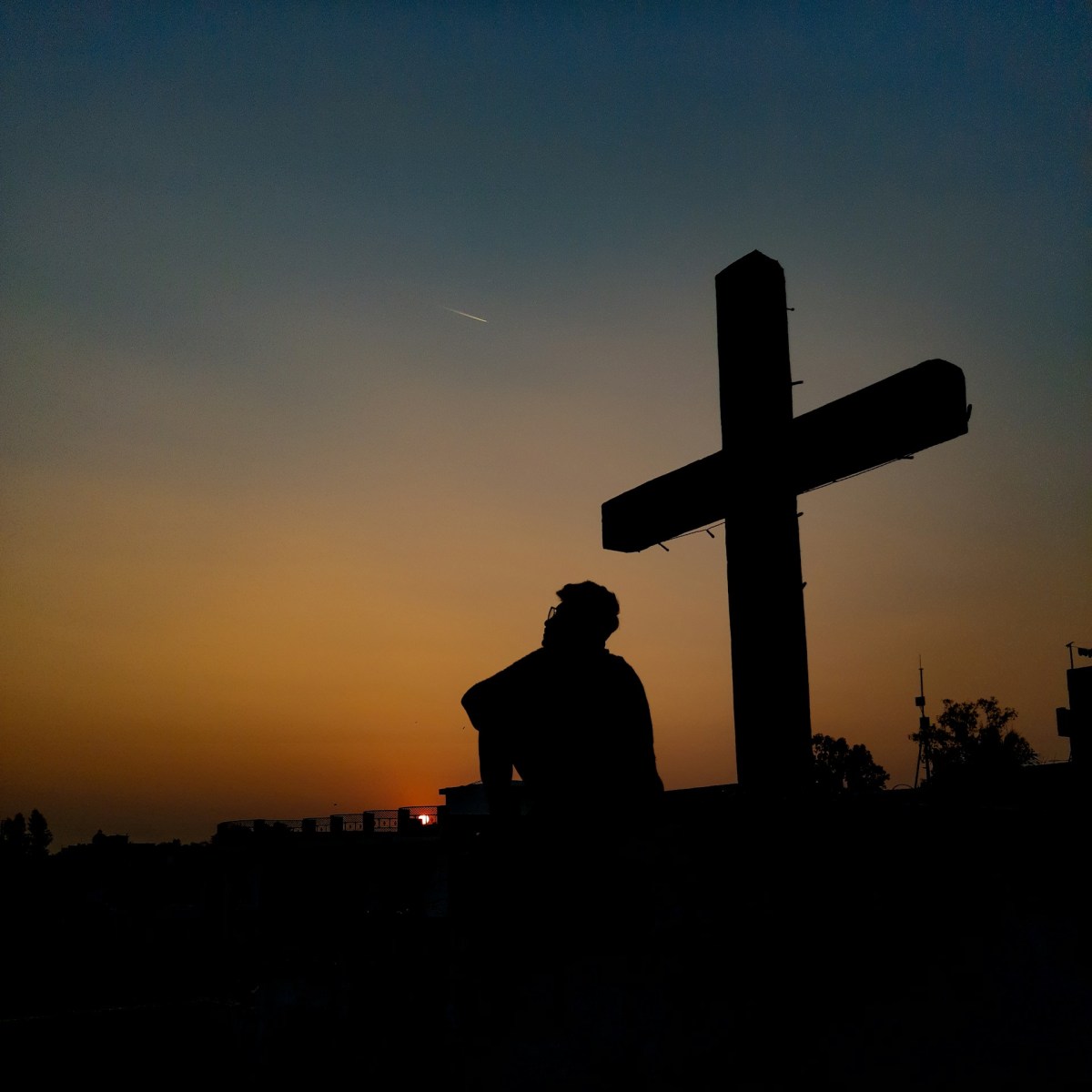

SEEK 28 – Predestination
Question: If God has predestined everything, why bother? Do I have free will?
Bible Reading: John 15
Text: “You did not choose me, but I chose you and appointed you to go and bear fruit—fruit that will last. Then the Father will give you whatever you ask in my name” (John 15:16)
If being asked about other religions is one of the most common questions asked by non-Christian young people, being asked about ‘predestination’ is one of the most common I am asked when visiting church youth groups. Sometimes I think the question is asked by those who have a real problem with the doctrine, but I suspect that at other times it is asked by those who like a bit of obtuse theological argument, and want to show how clever they are.
I am assuming that you are not one of the latter. That this really is an important issue for you. At first glance the question is a disturbing one that seems to make sense. After all, if God has predestined everything then surely we are trapped– there is nothing we can do? We do not have free will and the whole preaching of the Gospel and the call to repent and believe is just a game. This view was perhaps best expressed by the Scottish poet Rabbi Burns in his poem ‘Holy Willie’s Prayer’. Here is the English translation of the Scots!
O Thou, who in the heavens does dwell,
[And] As it pleases best Thyself,
Sends one to Heaven and ten to Hell,
All for Thy glory,
And not for any good or bad
They’ve done during their lifetime!
Burn’s poem is a poem about a religious hypocrite. It reflects a common misunderstanding of predestination and salvation. God does not send people to Hell irrespective of what they have done. Rather the Bible tells us that the dead are judged according to what they have done. (Revelation 20:12). God is just. He does not lie. He does not play games. He is pure justice and pure goodness. Those who go to Hell, go there because they have chosen to go there. They have chosen to be without God – which is Hell. And God gives them what they have lived for.
But the other side of that coin is that those who go to heaven, go because Christ has chosen them. “In him we were also chosen, predestined according to the plan of him who works out everything in conformity with the purpose of his will” (Ephesians 1:11).
As Jesus told his disciples – you did not choose me, but I chose you. The teaching is clear but there are some obvious questions which arise from it.
Do I have free will? Yes – but it’s not absolute. Your will cannot determine anything against your nature. You could will to fly but you will never get off the ground just because you will it – no matter how much you flap your arms! The trouble with our will is, as Martin Luther pointed out in his book The Bondage of the Will, that we are bound by our natures. We need a new nature that we may freely choose to enter the kingdom of God. Without being born again of the Spirit, we cannot even see the Kingdom of God, never mind enter it!
Is it fair? Yes. God is not unjust. How can it be unfair if we get what we have chosen? No one goes to Hell who has not chosen to go there. No one goes to heaven who has not been chosen.
Am I chosen? The Puritan Thomas Manton answered this question helpfully: “We know God to be ours by giving ourselves up to be his. His choice and election of us is a secret until it be evidenced by our choice of him, till we choose him for our portion” (Works of Manton vol 7 p.447).
Your task is not to work out whether you have been chosen; your task is to believe and repent. When you do so then you will know that you have been chosen. I once heard an old preacher describe it in this way.
I know that this question is often asked because people find the doctrine of predestination (or election, or the sovereignty of God), to be a disturbing one. But, as John Calvin, pointed out – it is not meant to be like that. In fact, if it is taught well, it is one of the most comforting teachings you can have. As an 18-year-old student in the University of Edinburgh I recall the impact on my life when I discovered that my salvation did not depend ultimately on my choice, but on God’s. Rather than being a restricting and depressing doctrine – it freed me and gave me a great assurance and joy. I pray that you will know the same.
Consider: If God has chosen you, the Spirit has given you new birth and the Son given you new life, why would you think it didn’t matter what you did? Predestination is not an excuse for not bothering – it is the greatest reason to bother! We care and love because he first loved us!
Recommended Further Reading:
Chosen by God – R C Sproul
And this article by John Piper – https://www.desiringgod.org/articles/before-you-believed-you-belonged
Prayer: “Oh, the depth of the riches of the wisdom and knowledge of God!
How unsearchable his judgments,
and his paths beyond tracing out!
34 “Who has known the mind of the Lord?
Or who has been his counsellor?”
35 “Who has ever given to God,
that God should repay him?”
36 For from him and through him and to him are all things.
To him be the glory for ever! Amen. (Romans 11:33-36)
Romans Road to Hope 14 – Predestination

Thanks David, well put!
Thank you, one of the most helpful articles I have read on this subject and very timely at this Easter season (Rom 6:4-6).
‘In nature’s infinite book of secrecy
A little I can read.’
(William Shakespeare)
Youthful fascination with the power of technology can draw science graduates to imagine we will approach total human knowledge of everything which exists, assuming the material sphere is the only one. The question of epistemology is relevant to this question. Realising how little we know (or control) is helpful!
Recognising the depravity of humans, as happens with getting older, makes it a comfort to know God is in control. The world would be a permanent hell if we were in total control.
The character of God (revealed in Christ) is critical. It’s not just a fork in the railway journey with a line to hell and one to heaven, plus God is not distant from human suffering.
I think C S Lewis tears up scientific determinism very well. But do we fail to present those thoughts clearly enough? I think scientific determinism escapes criticisms thrown at unfair presentations of biblical predestination.
‘Mindless amorality’ is the thrust of scientific determinism. Give me divine predestination any day of the week!!!!
Do the Dawkins brigade have zero answer to the mysteries revealed on a 2 minute walk in spring evening: the cosmos and night sky/ nature coming to life in spring/ language-our ability to chat about all this with neighbour out for a dog walk……..?
I fully believe in predestination..I would like to make that clear and have no doubt about it, but doesn’t the Bible say that God wants no one to perish? As a Christian myself, I often wonder about this. My own brother, like myself, raised in a Free Church home, has chosen not to repent. Not being disrespectful, but does that mean that I was Chosen and he wasn’t ?? I also accept that he could have a last minute conversion.
Hi Myra, there is a lot in your question…..the tension between God’s sovereignty and man’s responsibility is a real one. The bible teaches both – how they reconcile is not easy. The point about your brother is that we do not know….in this life we all have a responsibility to repent – when we do so we realise that a bigger purpose has been at work…
Hi David,
Thank you for this post. As someone who’s wrestled with predestination for a while, I appreciated your pastoral tone and the Manton quote especially. I’d value your thoughts on something I really struggle to resolve and has caused a few restless nights.
You argue, following Luther, that our will is bound by our nature: we can’t choose God any more than we can fly by flapping our arms. You also say that “no one goes to Hell who has not chosen to go there.” Putting those together, the fallen person’s “choice” of Hell looks like the only choice their nature allows. And none of us chose that nature; we were born into it.
I know the Reformed reply. Our inability is moral, not natural: we don’t come to God because we don’t want to, and unwillingness is culpable. I also know Romans 5 places us in Adam, and that Romans 9 warns against answering back to God. I take all of that seriously. But I struggle to see how an unwillingness we were born with, and are powerless to change, carries the same guilt as one freely chosen. Unless, that is, God’s grace is offered to the person to overcome it.
That seems to be where Jesus himself locates condemnation. John 3:19 says the judgment is that light came and people loved darkness. In John 9:41 he tells the Pharisees that if they were blind they would have no guilt. Guilt rests on rejecting the light given, not on lacking a light never offered.
So my question is really about grace, not the will. Most traditions agree the will is bound. Arminius and Wesley did, and Luther certainly did. Yet the Lutheran tradition that grew from Luther’s work holds both the bondage of the will and that Christ died for the whole world (1 John 2:2), because God desires all to be saved (1 Timothy 2:4).
If the will is bound and only grace frees it, does God extend that grace to everyone? If he does, I can see how those who refuse have truly chosen. If he doesn’t, I struggle to see how the “choice” of Hell is really theirs, or how the gospel invitation to “whoever believes” is sincere to those it was never meant to reach.
I’m not asking in order to score a point. I genuinely want to understand how you hold this together, and whether you’d go with Luther on the first point but not the second.
Thanks again for your writing.
Its a complex and deep question. My own view is that we are morally responsible to love God with all our heart, soul and mind – but because of our sin we are bound and unable to do so. Jesus comes to free those who are trapped in their sins. But we are dead in sins and trespasses so we need the Spirit – Ephesians 2:8-10 and John 6:44
I agree with all of that, but it’s the ‘responsible and unable’ part I’m stuck on. If my unwillingness came from Adam and only the Spirit can change it, what makes it my fault rather than my condition? Is your view that Scripture holds both and we accept the tension, or do you think there’s an explanation of how they fit?
Yes – I think the way to understand it is by term of Covenant. We are all part of the human covenant with God which we failed. We become part of the new covenant when we have faith in Christ….but there will always be some degree of tension.