

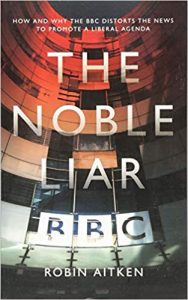

Chapter Five of The Noble Liar is entitled “Auntie the Apostate: Losing Her Religion” . It is incredibly insightful and helpful. The following is a summary with some of the best quotes. Read and think about this. We have moved from the BBC broadcasting CS Lewis during a time of crisis, to the BBC now promoting the secular prophet, Richard Dawkins. It has not been a change for the better.
Auntie the Apostate; Losing Her Religion
The Christian Foundations of the BBC
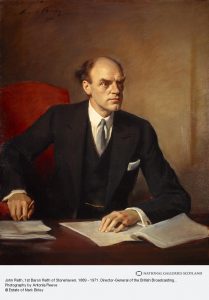

He wanted the BBC to be seen as an instrument of moral improvement rather than being dominated by commercial concerns. The BBC’s earliest corporate character was to be “serious minded, consciously aligned with traditional Christian morality and conscious also obvious obligation to be fair.” (P.121).
C S Lewis


Whilst the BBC were happy to broadcast these talks, some of Lewis’s contemporaries in Oxford were not. They regarded him as some kind of academic heretic for believing in God. In 1951 one don voted against Lewis been granted the prestigious poetry chair precisely because he had written works of popular theology. Lewis lost by 194 to 173.
The Decline of Christianity in the UK
Why there was a decline of Christianity in the UK after the 1950s is a question of great importance and great dispute. Certainly the horrors of the first and Second World War are part of the answer. “The power to destroy the world itself was, seemingly, now in human hands; when once mankind was taught to fear God, now it learned to fear itself.”(Page 131).
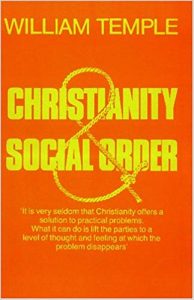

“In his book Temple advocated universal healthcare, education for all, decent social housing and improved working conditions– the core program, in fact, of the new government. It would be an exaggeration to claim Temple as the sole author of the welfare state, but it is also wrong that he, and the Christian tradition that he represents, should be written out of the script altogether, which has often been his fate at the hands of contemporary writers. It is fair to say that the welfare state, with its level of fairness and the recognition of the worth of each individual regardless of station in life, is the natural offspring of Christian teaching; a society which looks after the poor is a society moulded by a philosophy quite different from naked capitalism.”(Page 132).
The church had been the major provider of welfare services, now it was the state. Furthermore the church, especially the Anglican, had been identified as the Tory party at prayer. Over the second half of the 20th century the Church of England seemed at times to be a wholly-owned subsidiary of the Labour Party. It is fascinating that in today’s culture the bishops are largely of one political mind.
The Revolution from Within
The Labour Party was in its foundations far more influenced by Christianity that it was by Marxism. But by the 1950s and 1960s Communism was both fashionable and influential.
‘The fact that Soviet Communism was also explicitly atheist hastened the decline of Christian influence within Labour”(Page 136).
The BBC as a public corporation, was an ideal vehicle for those who sought to revolutionise society.” It was the German student revolutionary Rudi Dutschke who coined the phrase ‘the long march through the institutions’ as a way of achieving revolution from within.” (Page 137). From the 1960s onwards a cohort of left-wing politicians, teachers, social workers, lawyers and journalists gained entry and slowly but surely ascended through the ranks. If you’re going to change the world you need to change minds and so you needn’t to control the media. The BBC was right for takeover.
“By the 1990s through the natural processes of generational change, the whole institution was firmly in the hands of the 1960s generation. The infiltration was complete and the radicals were snuggly ensconced in the higher echelons of the Corporation, able to ensure that all its output conformed to correct thought. Today, what was once transgressive has become mainstream – for the radicals are never satisfied and are still determined to sweep away what little remains of the old morality.” (Page 138). Aitken goes on to describe how this applies with the example of euthanasia and discusses the significance of the Lady Chatterley’s Lover trial.
“The abandonment of the idea of an objective morality– that is one that claims there are moral laws that are true and universal which is Lewis’s ‘natural law’ – follows logically from an atheistic perspective. In a world without God who is to decide right and wrong? The Christian churches belief that the moral law comes from God– and thus must be obeyed– makes no sense at all to an atheist. Within the BBC, any idea of an objective morality has been jettisoned to be replaced by a protean morality that is built on the shifting sands of fashionable opinion and is constantly changing its ground.”(Page 144).
Aitken then goes on to discuss the way that the Church of England also gave in to the pressures of social liberalism. “The C of E has become painfully anxious to be non- judgemental, knowing that to do otherwise is to invite the condemnation of social liberals. And it is in this respect that the role of the BBC matters.” (Page 146). I would suggest that Aitken is wrong here. It is not that the C of E is not non-judgemental – it is very judgemental on some issues – it is just that it shares the same judgements as the new Establishment. In an important insight Aitken goes on to observe:
“The BBC has wholeheartedly thrown its lot in with the liberal reformers; there has been no ‘impartiality’ on any of the big moral issues of the past half century. In every instance, the socially conservative argument has been depicted as callous, reactionary and dogmatic. Any counter argument to the prevailing liberal consensus is now ignored altogether: social conservative voices are conspicuous by their absence on mainstream current affairs programmes.” (Page 147).
Pornography
As an example of this Aitken cites pornography. Again his insights here are important.
“If it is a victory for ‘the humanitarian forces of English liberalism’ that all now have access to pornography, is that a wholly beneficial outcome?” (Page 147).
“The evidence is overwhelming that pornography causes a great deal of harm, but the BBC keeps quiet. Why? “The reason for the deafening silence is that social liberalism has now achieved an intellectual hegemony among media professionals as it has in both the law and education. It seems that there must not be a debate on this matter, because to do so would be to challenge something, which, in the view of prominent liberals like Geoffrey Robertson, underpins the whole edifice of social liberalism. Perhaps if we started to question the wisdom of permitting pornography, other assumptions which are foundational to the new liberal order might also unravel?” (Page 149).
Auntie Hates The Family
Aitken now talks about how the BBC also largely ignores the evidence about the harm caused by divorce and the breakup of the traditional family. He cites the opinion of the most senior family judge in England and Wales, Sir James Munby, who in May 2018 made a speech at the University of Liverpool in which he stated that
“In contemporary Britain the family takes an almost infinite variety of forms. Children live in households where their parents may be married or unmarried. They may be brought up by single parent, by two parents or even by three parents…..Many adults and children, whether through choice or circumstance, live in families more or less removed from what, until comparatively recently, would have been recognized as the typical nuclear family. This, I stress, is not merely the reality; it is, I believe, a reality which we should welcome and applaud.” (Page 153).
If a speech had been made advocating the traditional view of marriage and the family then the BBC would have given it a great deal of critical attention. But the BBC ignored it. And they continue to ignore the connection between the growing unhappiness of Britain’s children and the breakdown of the family. Ideology trumps humanity.
“Liberal social policies, like those pursued in Britain for the past half century, come with a high price tag – and the people who have paid it are the nations children.”(Page 155).
The God Delusion


“The BBC attached enormous importance to this book and its author was repeatedly, and respectfully, interviewed on all the main BBC outlets on radio and television. The BBC reacted as though Prof Dawkins, a geneticist, really had nailed the essence of the argument and settled the matter once and for all.”(Page 156.)
Aitken notes that despite Prof Dawkins giving his own version of the 10 Commandments which includes treating a fellow human being faithfully, he has been divorced three times!


The BBC assiduously promoted to The God Delusion. “Partly thanks to the BBC’s heady sponsorship, The God Delusion became a global phenomenon which– given its intellectual mediocrity– takes some explaining. “ (Page 159). But of course they gave little or no publicity to those of us who challenged Dawkins. That would have been blasphemy!
On Writing the Dawkins Letters
The Noble Lie
“The noble lie at the heart of this new morality is that we can, as individuals and as a society, dispense with an objective moral code without harmful consequences.” (Page 161).
“The result of our national, transgressive moral revolution is now apparent: a horribly diminished sense of security for millions of children and it coarsening and debasement of our attitudes to sex. Plus a rise in mental illness across the population. In addition, there has been a profound change in the value we put on human life itself.
It is often said that contemporary Britain is a post-Christian country; if so, the ills which afflict the nation today cannot be laid at the door of the old belief system. This country of unhappy children and uncertain adults– this is the world social liberal values have conjured into being.
The BBC which, once upon a time, understood its responsibilities differently and promoted a straightforward Christian view of the world, has been the midwife to this transformation; in fact, more than that with midwife– an active agent of change agitating for the new morality. And, the change having been successfully realised – with permissive liberal values now triumphant – the BBC no longer even allows a social conservative challenge to the new dispensation. Any claim by the Corporation, to be ‘impartial’ in this debate is a lie.” (Page 163).
That is the sad truth.
The BBC and Christianity in Scotland
Finally here is my personal story about the BBC and religion. I always wondered wby there were so few evangelicals on BBC Scotland. Then one day I was told the truth – that the person responsible was a C of S minister (a liberal) whose policy was to ensure that evangelicals did not get on, or if they did they were to be very tightly controlled. This was his policy- not the BBCs. In other words, as has so often happened, the bureaucracy of the C of S was hindering the Gospel. It is only with the development of other forms of communication that the BBC’s almost monopoly on religious broadcasting has been challenged – and a much friendlier environment has been established. Things in Scotland are much better in this regard than they were 25 years ago.
I was once asked to do an Easter programme with Anna Magnusson. We had a half hour recorded conversation in a graveyard in Edinburgh discussing resurrection (which I believed in, she didn’t). The producer contacted me afterwards and said that it was great radio and she loved it. However her bosses would not allow her to put it out as it was. Why? Because it lacked balance! Apparently having two people with opposite points of view was not ‘BBC balance’. So they called in a liberal clergyman who did not believe in the Resurrection and my part was reduced from 15 minutes to around 8. I understand absolutely what Aitken is saying. I have experienced it.