

This article was published in AP here
Does the Alliance for Responsible Citizenship really have a better story?
A report from the ARC Australian Conference in Sydney (22nd Oct 2024)
The Alliance for Responsible Citizenship is a new and impressive organisation which in its own words is “an international community with a vision for a better world where every citizen can prosper, contribute and flourish”. A key member, Os Guinness, argues that we are at a ‘civilisational moment’ in the Western world, and that we need to act, not despair.
It was with some degree of anticipation that I, and 700 other delegates, attended their first Australian conference. Although there were no theological speakers (apart from David Stroud, the founding pastor of Christ Church London) there were a few clergy and leaders of Christian organisations present. The conference was introduced by Baroness Philippa Stroud and John Anderson, whose work and leadership are outstanding. John is a real gift to and from Australia. Other speakers/panellists included Gemma Tognini, Erica Komisar, Jacinta Nampijinpa Price, John Howard, Jordan Peterson, Tony Abbott, Niall Ferguson, Paul Kelly, Peta Credlin, Greg Sheridan and Peter Costello. The day was split into five intense sessions:
1) Why now? – This Civilisational Moment;
2) Social Fabric and the Family;
3) Free Markets and Good Governance;
4) Energy and the Environment;
5) What Next? A Call to Action.
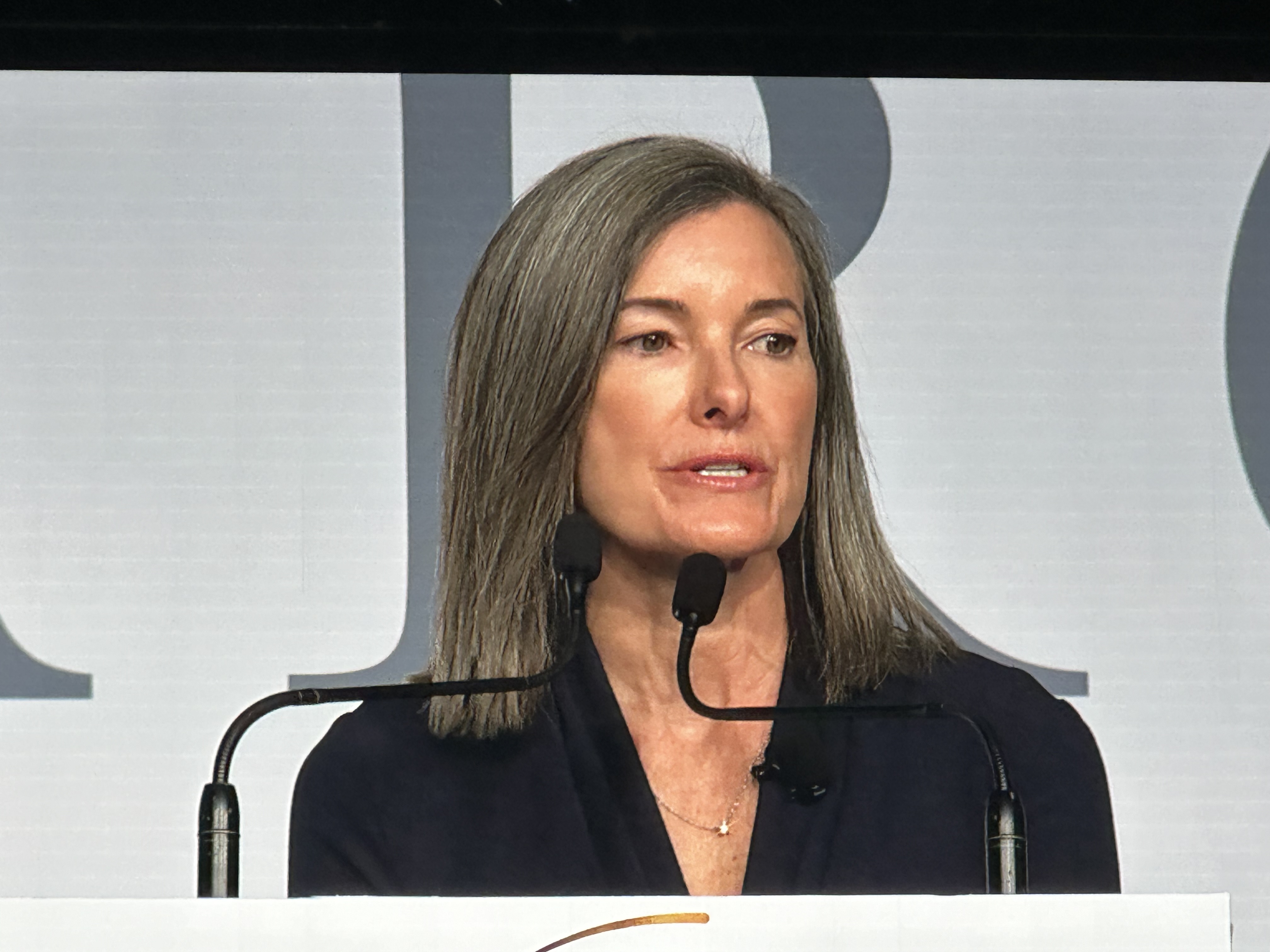
I loved the whole day – and as I write this on the train home to Newcastle – I am deeply thankful to the Lord for such an inspiring time and the leadership provided by John Anderson and Philippa Stroud. The aim of the day was to tell a better story – or rather to encourage us to tell a better story. Did it succeed? Yes and no.
Yes – in that the story that was told is a whole lot better than we normally get on our secular media, in our schools and from many of our politicians. It was a much better story. I was disappointed that education, the media and the arts were barely mentioned, but I suppose time was limited. However – and here we have to deal with the elephant in the room – what is the better story? A few hints were offered….
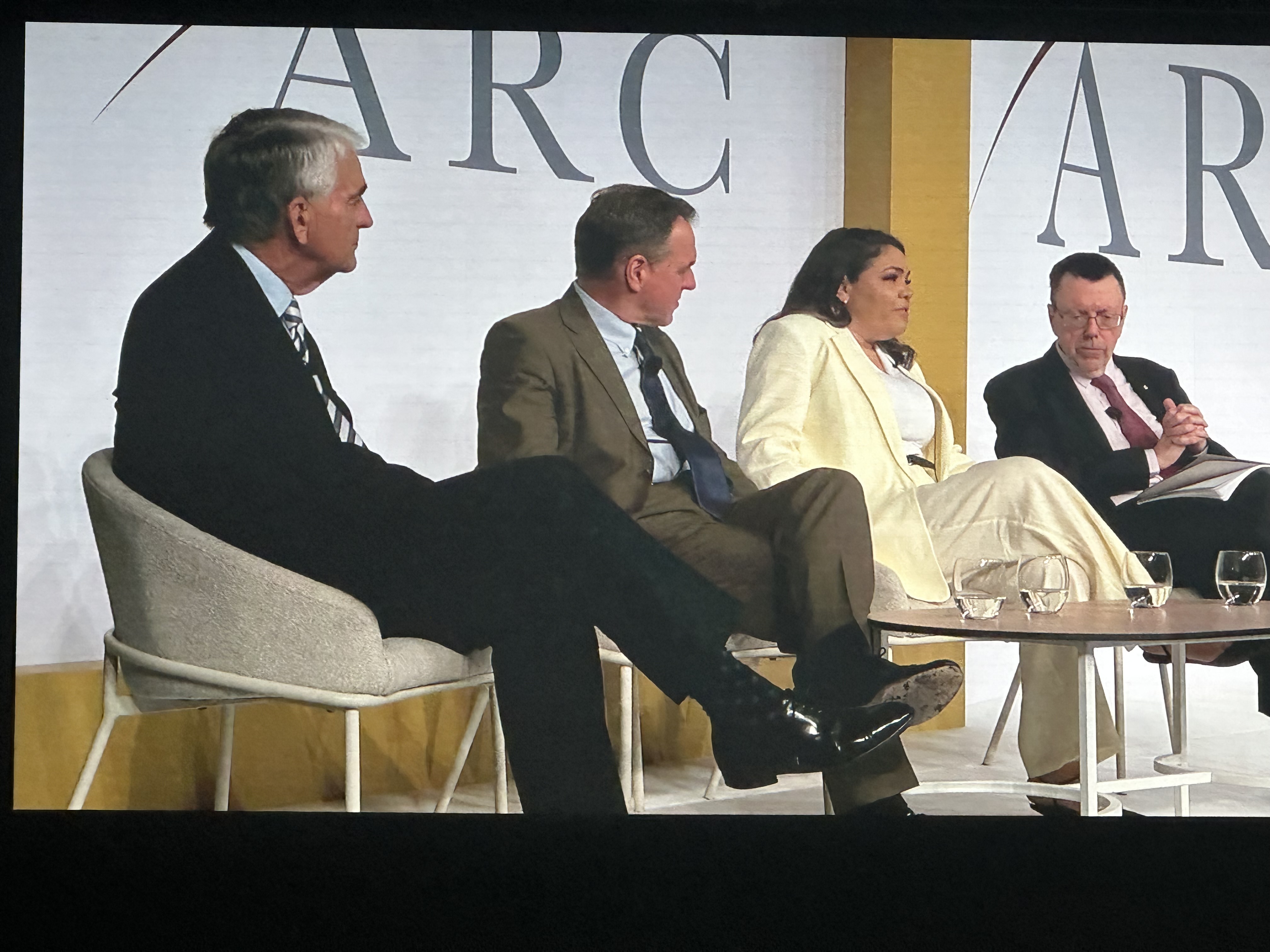
A good conference is like a good sermon – it should stimulate questions! ARC Sydney certainly did. How should we bring up children? Does that include spiritual teaching? Where do we place our hope? The answer given was: ‘in responsible citizens’. But how do we get responsible citizens? Paul Kelly asked what is virtue and how do we get a virtuous society? Nobody really answered that.
Such is the shallow polarisation in society that I suspect, even amongst Christians (who should know better) ARC will be dismissed as yet another ‘right wing conservative’ movement. It really is not as simple as that. Others will see it as the great hope. It isn’t as simple as that either.
The trouble is that whilst the various dots were excellent, there was no clear narrative joining them. Jordan Peterson had the final talk of the day, and I had hoped that he would bring this all together by pointing us to the Best Story of all – the Good News. We were to be disappointed. Peterson looked and sounded tired – perhaps because he had just finished a podcast with Richard Dawkins?! I love Peterson and regard him as both a hero and an inspiration. But he is not a Christian, so he does not get the Gospel – something which he made clear in his speech.
For example, he stated: “If we conduct ourselves according to the highest ethical principles there is no desert we cannot turn blue…. that’s the better story that ARC hopes to tell”. That’s not really a great story. It’s an impossible burden. In fact, Peterson seems to have reduced the Gospel to a kind of moralistic, therapeutic Deism, albeit with a heavy dose of tough love.
It was clear from his analysis that he doesn’t get the Cross and that he regards it as some kind of great example enabling us to ‘find meaning in the adoption of maximal voluntary responsibility”.
If this is the ‘better story’, then it may offer challenge and hope, but it is a challenge that will fail and a hope that will be dashed.
Although it will be objected that ARC is not a specifically Christian movement and that therefore the organisers were being wise in ensuring that no overtly Christian teaching was displayed, I would suggest that that is a tactical error. It allows the whole movement just to be dismissed as a right wing (or if you are the SMH, a ‘far right’) movement. The truth is that if you are arguing for a society based on Western Liberal values, you have to recognise that those values came from, and were not just displayed through, Christianity. And Christianity without Christ is useless.
It is clear that ARC sees itself as the antidote to cultural Marxism. Can I make the humble suggestion that if it is to be so, then it needs to adopt cultural Christianity as its unifying narrative. By cultural Christianity I do not mean the kind of Christianity which wants only fruits without the roots. The cultural Marxists really do believe in the ideology they are seeking to promote in their ‘long march through the institutions’. Instead of a long march through the institutions, we need a Christianity which is salt and light that pervades all of our institutions. And for that you need real Christians. The values that ARC espoused can be adopted and used by those who are not Christians. They are for the good of the whole of society. But for them to be stable, secure and safe (to borrow a line from the energy discussion), they need to be rooted and grounded in Christ. Blessed is the nation whose God is the Lord (Psalm 33:12).
ARC will only be able to tell a better story that makes a real difference, if it has as its foundation the Greatest Story.
– David Robertson
Scots Kirk, Hamilton, Newcastle
Cultural Marxism in Modern Society…
The Greatest Danger Facing the Presbyterian Church in Australia Today? AP